York’s Daisy Myers remembered as Rosa Parks of the North
Daisy Myers & Gov. George Leader
York College of Pennsylvania, 441 Country Club Road, York
The situation
Almost 70 years have passed since the Bill and Daisy Myers’ family moved to Levittown, the massive subdivision then under construction in this eastern Pennsylvania region. There, they faced hostility in this all-white community.
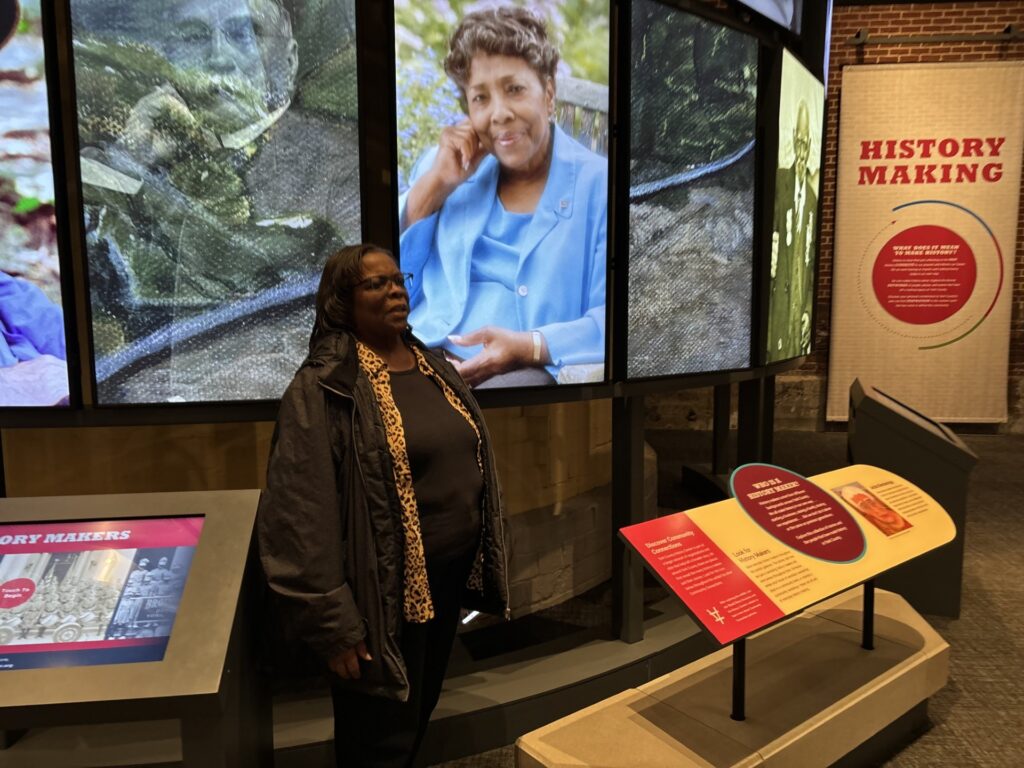
Gov. George Leader intervened, ordering state police to quell the violence. This Myers family story in Levittown and later as York County residents is preserved in Daisy Myers’ autobiography, published in 2005 and updated in 2020. Daisy Myers has been called “Rosa Parks of the North,” and her life and times have been told in exhibits and stories by the Pennsylvania Historical and Museum Commission. Her meeting in 2002 with Leader, a York native, at the 25th annual Conference on Black History in Pennsylvania at York College drew extensive media attention.
Now, retired York College history professor Peter B. Levy has written a historical play of the Myers family’s story on the eve of its 1957 encounter with white mobs in Levittown. The York County History Center hosted a table reading of his play “43 Deep Green Lane” in 2024, and the Baltimore Playwrights Festival asked Levy to do a staged reading in February 2026.
As part of that event, Levy was asked in an interview what he hoped audiences would take away from his work. “Perhaps,” he said, “that Daisy Myers deserves to be recognized as one of our great heroes.”
The witness
This is the interview with Levy, conducted by Baltimore Playwrights Festival Board Advisor Larry Lambert.
Q. Your play 43 Deep Green Lane is the inaugural staged reading for the BPF Season 45 in 2026. Coming after the success of last year’s Mrs. Richardson, how does it feel to have the lead-off presentation slot two years in a row?
A. It’s an honor to have the opportunity to participate in the Baltimore Playwrights Festival two years in a row. I received a lot of great feedback from audience members and the cast last year and hope for more of the same this year. In terms of leading off this year’s readings, I just hope that potential viewers aren’t deterred by the remaining piles of snow and ice.
Q. What led you to choose Daisy and Bill Myers’ experience in the desegregation of Levittown, Pa as your subject?
A. As you may remember, I am an historian of the civil rights movement and I am especially interested in lesser-known figures in the fight for racial equality, such as the Myers. As their daughter, Lynda, declares at the end of the play, Daisy and Bill Myers’ story “is not just a historical footnote but a living testament to the power of the human spirit to overcome adversity and inspire change.”
Q. What were your sources for the creation of this play?
A. I had lots of great sources, including memoirs written by two of the main characters, Daisy Myers and Lew Wechsler, as well as contemporary newspapers, archival material, interviews and scholarly works on Levittown.
Q. Has 43 Deep Green Lane been presented before, and if so, what were the audience reactions?
A. I enjoyed a staged reading of an abridged version of the play at the York (Pa.) History Center in 2024. Audience feedback was very favorable, including from the children of the main characters, who have encouraged me to continue to work on the play.
Q. Is there any specific thing that you want our audience to take from this play?
A. Perhaps that Daisy Myers deserves to be recognized as one of our great heroes. Indeed, in my play, she is occasionally referred to as the Rosa Parks of the north, for her courage, dignity and perseverance.
Q. You have another year of retirement under your belt. Has having this time made any changes to your research and writing schedule?
A. Not really, except that I have joined a couple of writing groups and my participation in them has prevented me from slacking off. More seriously, I feel very lucky to have lots of time to write.
Q. What projects are on the horizon for you?
A. I have a couple of other historical dramas in the hopper, including one that revolves around the trial of the mayor of a nearby community (York, Pa.’s Charlie Robertson) for the murder of a young black mother of two (Lillie Belle Allen). She had been killed thirty years earlier; he had been a policeman at the time. I also expect to continue to make revisions to my plays about Gloria Richardson and “43 Deep Green Lane.”
The questions
History can often be dramatized through plays to add an emotional level. What are some of your favorite plays or movies that depict real events or people? Does dramatization add or detract from the real thing?
Related links and sources: David Kushner’s “Levittown,” James McClure’s “Almost Forgotten,” Daisy Myers’ “Sticks ‘n Stones published by the York County History Center. Photo in viewer, York Daily Record. Other photos, Jim McClure.
— By JAMIE NOERPEL and JIM McCLURE