Great Migration in York County
Southeast corner of Princess Street & Pershing Avenue, York
Celebrating America 250, but in a different way
The situation
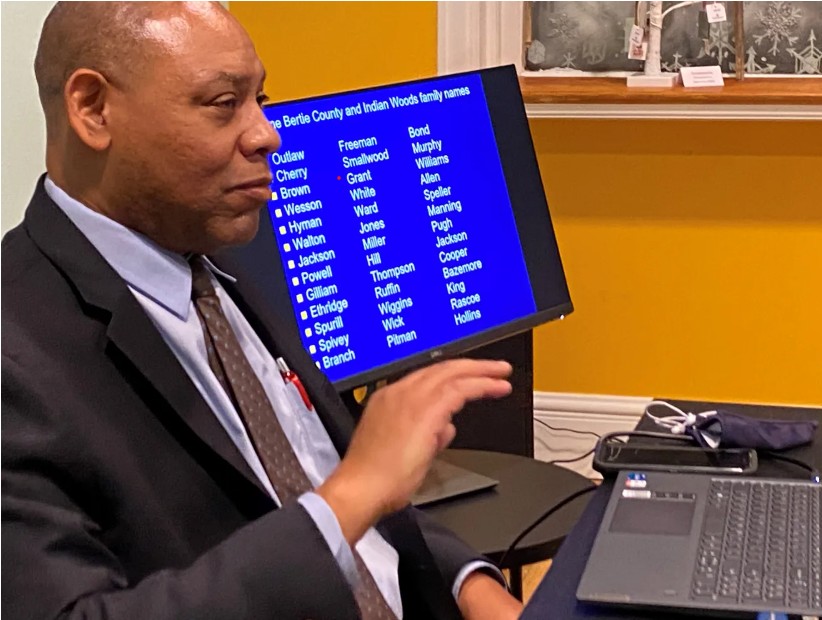
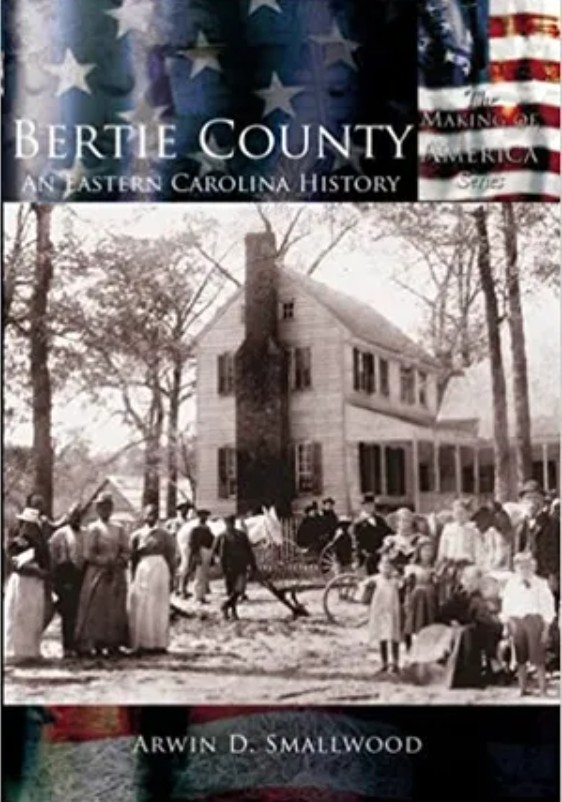
Dr. Arwin D. Smallwood came to York in 2021 to take in the place that so many of his fellow Bertie County, North Carolina, residents have lived for generations, their home since moving North in the Great Migration.
And in his visits to the historically Black Lebanon Cemetery, meetings with fellow Smallwood family members and a tour of York’s downtown, this history professor at North Carolina Agricultural and Technical State University talked about the Bertie County homeland. That was the home of these African American families, among other well-known York County residents: Hawkins, Outlaw, Atterberry, Rascoe, Mitchell, Williams, and Biggs.
They came here. And contributed.
As just one example, a well-known York countian from Bertie County, Serena Outlaw Smallwood, operated a namesake eatery at 148 W Princess Street in York. Of course, some Bertie countians stayed in the South and contributed. Her brother, Samuel D. Outlaw Jr., operated a blacksmith shop in Onancock, Virginia.
The contributions of Bamberg, South Carolina, residents in York County after they arrived here as part of the Great Migration (post-World War I to about 1970) is well-known. Like those from the Bamberg area, people from Bertie left a life of sharecropping and tenant farming in the Jim Crow South for opportunity in York. Like the South Carolina families, they followed rail and bus paths north.
And when one family member settled in York County, other family members followed. Some of these families stayed north the Mason-Dixon Line, enjoying regular visits to the South – a journey that took place for generations. And those visits have worked the other way, too.
The Bertie stories intersect with those with ties to South Carolina. Historian Samantha Dorm is learning about her family connections with Bertie, while she is also interested in her late father’s family: Russell Dorm’s kinsmen, who came from the Bamberg area.
In connection with America 250 celebrations from 2026 to 2028 in York County, she offers a perspective in “The Witness” of the notable anniversaries as a descendant of those who came here from Bertie, Bamberg and other places in the South to join hundreds of African American families who had lived in York County for generations.
The Witness
We, Too, Were There, America at 250
On the Fourth of July, I will watch children wave flags.
I will see men dressed as Continental soldiers, women in colonial gowns, and families celebrating the birth of a nation. They will proudly speak the names of the Sons and Daughters of the American Revolution.
Many will celebrate because they can point to an ancestor who fought for liberty.
I will celebrate, too.
But I cannot celebrate in quite the same way.
Because while we share the same blood, we do not share the same experience.
America turns 250 years old this year.
For many, that anniversary begins in Philadelphia in 1776.
For my family, it begins there, too—but it also begins in the tobacco fields of Virginia, the plantations of Maryland, the slave rolls of North Carolina, and the “forced” migration west into Tennessee.
To find my family, I must first follow the path of someone else’s family.
That is the uncomfortable truth of African American genealogy.
Our names were often inherited not from our own ancestors, but from those who claimed ownership over them.
Smallwood.
Outlaw.
Gaskins.
Nicholls.
These names appear proudly throughout Revolutionary history. They also appear throughout my family tree.
The same names.
The same bloodlines.
Entirely different stories.
Major General William Smallwood is remembered as Maryland’s highest-ranking officer of the Revolutionary War. His Maryland troops—the legendary Maryland 400—helped save George Washington’s army from destruction during the Battle of Long Island.
His courage deserves remembrance.
His leadership deserves recognition.
After the war, he became Maryland’s governor, founded the Maryland Society of the Cincinnati, expanded his estate to more than 4,000 acres and by 1790 enslaved 56 human beings.
History records both accomplishments.
History records both truths.
His growing wealth was built not only upon military honor, but also upon land grants and the uncompensated labor of enslaved people.
The blood was shared.
The experience was not.
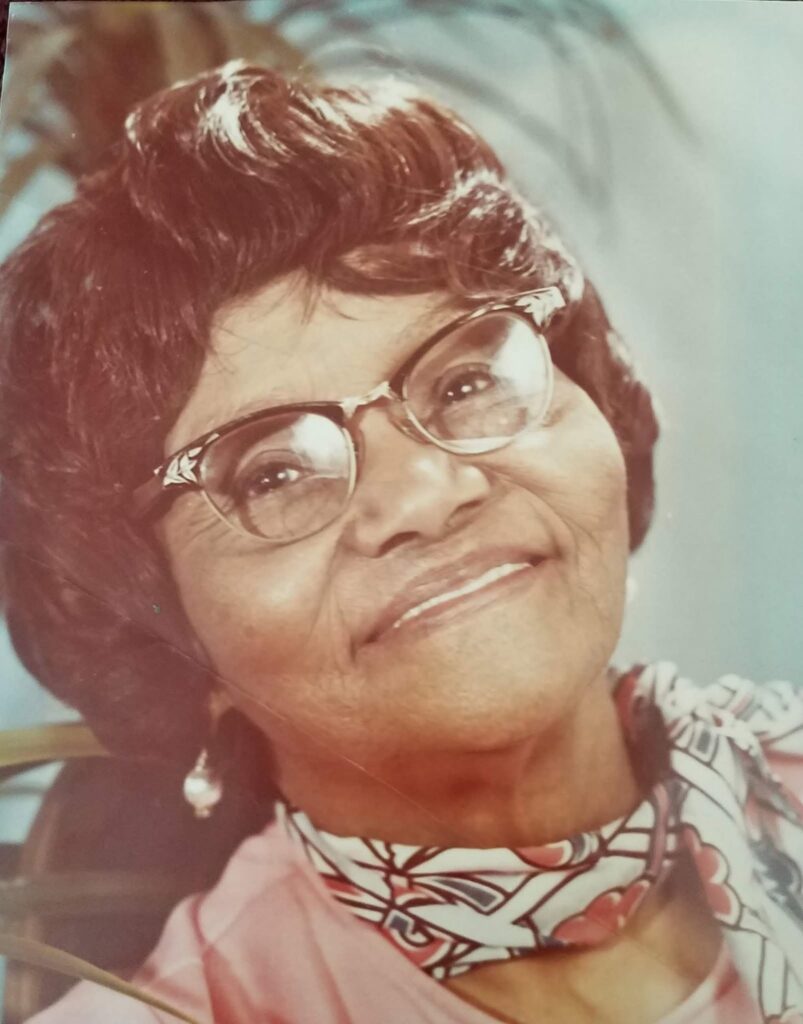
In Bertie County, North Carolina, another name appears.
Outlaw.
George Outlaw, son of Edward Outlaw, is listed as the enslaver of Samuel Outlaw, a Black man whose life was uprooted and carried west into Haywood County, Tennessee.
Samuel’s brother, Alfred Outlaw—my third great-grandfather—remained behind in North Carolina.
One brother’s life divided by a county line.
Another by ownership.
Families separated not by choice but by commerce.
Today, descendants of both lines still carry the same surname.
One inherited land.
The other inherited survival.
Then comes another familiar name.
Gaskins.
Lieutenant Colonel Thomas Gaskins served throughout the Revolutionary War in Virginia’s Continental Line. He stood among the Virginia gentry, commanded soldiers under George Washington and the Marquis de Lafayette, and helped secure American independence.
Military records tell another story as well.
Black soldiers fought under his command during the Yorktown Campaign.
Some were free.
Some were formerly enslaved.
All were Americans before America was willing to fully acknowledge them.
French officers remarked upon the bravery of Black soldiers serving alongside white patriots.
They fought for liberty.
Yet liberty remained incomplete.
The irony is impossible to ignore.
The commander returned home to a plantation sustained by enslaved labor.
The soldiers returned to a nation still debating whether their freedom belonged to them.
Virginia court records later reveal free Black families carrying the name Gaskins.
Were they descendants of those once enslaved by the family?
Many historians believe so.
Again, the names converge.
The histories diverge.
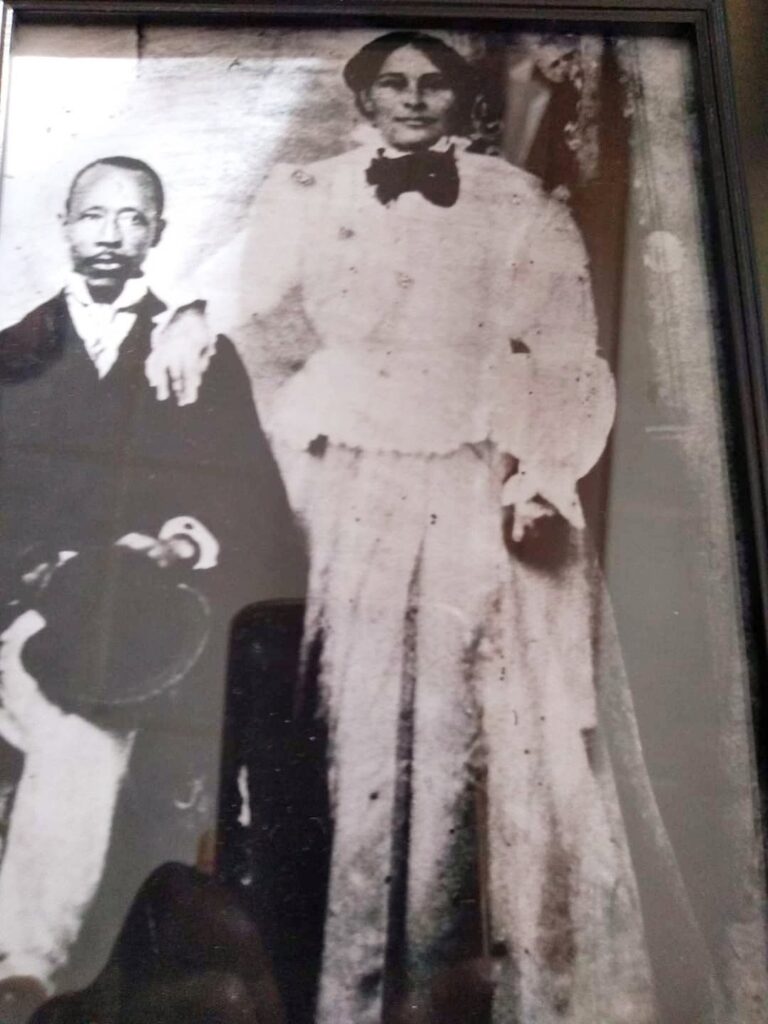
The Ball family enters the story.
Lieutenant Colonel Burgess Ball served beside Washington.
The Ball and Gaskins families were intertwined through marriage, property, militia service, and Virginia society.
Even George Washington’s own family intersects through his mother, Mary Ball Washington.
These are names celebrated in America’s founding.
And somehow, through generations of slavery, inheritance, migration, and survival, they became part of my family’s story as well.
Not because we attended the same banquets.
Not because we signed the same documents.
But because history bound us together in ways neither side could have imagined.
One home in Bertie County carried a name that still echoes today.
Liberty Hall.
The home of Captain Edward Outlaw.
Liberty Hall.
The words almost stop me in my tracks.
Liberty.
A beautiful word.
A painful one.
How could liberty exist inside a society built upon slavery?
Liberty for whom?
When the Declaration proclaimed that all men are created equal…
Who counted?
When the Constitution spoke of “We the People”…
Which people?
These are not questions meant to diminish America.
They are questions meant to understand her.
Fifty-six delegates signed the Declaration of Independence.
Not one looked like me.
Yet my family’s story has been woven into every generation of American history since before that ink dried.
We harvested the crops.
We built the roads.
We fought the wars.
We buried the dead.
We raised the children.
We defended a nation that did not always defend us.
African Americans have never stood outside the American story.
We have always been one of its authors.
Even when history neglected to print our names.
Frederick Douglass understood this paradox.
Rejecting those who dismissed the Constitution as irredeemably corrupt, he declared:
“The Constitution is a glorious liberty document.”
He believed America possessed both extraordinary promise and extraordinary contradiction.
He challenged the nation not to abandon its founding principles, but to finally live up to them.
Perhaps that remains our unfinished assignment.
So how should I view America at 250?
Perhaps with gratitude.
Perhaps with grief.
Certainly with honesty.
It is possible to love one’s country while refusing to romanticize every chapter of its history.
It is possible to wave the flag while acknowledging that generations of Americans experienced that flag differently.
It is possible to celebrate the ideals of liberty while recognizing that liberty was unevenly distributed.
These truths are not enemies.
They are companions.
Ignoring one diminishes the other.
The question before us is larger than genealogy.
It is the question every American inherits:
How do we grapple with our shared history—the good and the bad—without villainizing one another today?
None of us chose the century into which we were born.
None of us bears personal responsibility for the actions of long-dead ancestors.
Yet all of us inherit the consequences of the nation they built.
History is neither a courtroom nor a weapon.
It is a classroom.
If we hide from truth, we lose the opportunity to learn from it.
If we tell only stories of triumph, we misunderstand the cost of that triumph.
If we tell only stories of oppression, we overlook the extraordinary resilience that carried generations forward.
America deserves the whole story.
So do its people.
As the nation celebrates 250 years, I will celebrate alongside my fellow Americans.
Not because our journeys were identical.
But because they were intertwined.
The names that appear in Revolutionary muster rolls also appear in my family tree.
Some fought for liberty.
Some denied it.
Some inherited privilege.
Others inherited chains.
Together, knowingly or unknowingly, they created the America that shaped me.
This land is your land.
This land is our land.
Our history is shared.
Our responsibility is shared.
Our future must be shared as well.
I am proud to be an American.
Even when I am not proud of every chapter of American history.
Because loving a country does not require forgetting its past.
It requires remembering it honestly, learning from it faithfully, and ensuring that those who come after us inherit a nation that comes ever closer to fulfilling the timeless promise first written in 1776 — that liberty belongs to all of “We the People.”
In this Hometown History episode, a podcast about York County history, Jamie Noerpel and Dominish Miller interview Samantha Dorm on Lebanon Cemetery – York’s historically Black burial grounds.
The Question
Samantha Dorm writes that we can be proud of being an America, even if not agreeing with every chapter of our history. Loving America does not require forgetting its past, she says, that our memories must be honest. Others might say that we should not recall these moments, but just move on. How do you react to these views?
Related links and sources: Historian connects York County families with North Carolina Homeland. Photos, Outlaw and Serena Smallwood photos, Samantha Dorm. Other photos, Jim McClure.