Telling Thaddeus Stevens’ Southern Pa. story
Thaddeus Stevens-Lydia Hamilton Smith Museum
13-15 E. Vine St. Lancaster, Pa.
The situation
“Old Commoner” Thaddeus Stevens taught at York County Academy in 1815-16, his first job in Pennsylvania after his arrival from Vermont. He hung out a law shingle in Gettysburg and operated iron works in Franklin County. He moved to Lancaster to practice law and later served in the U.S. Congress.
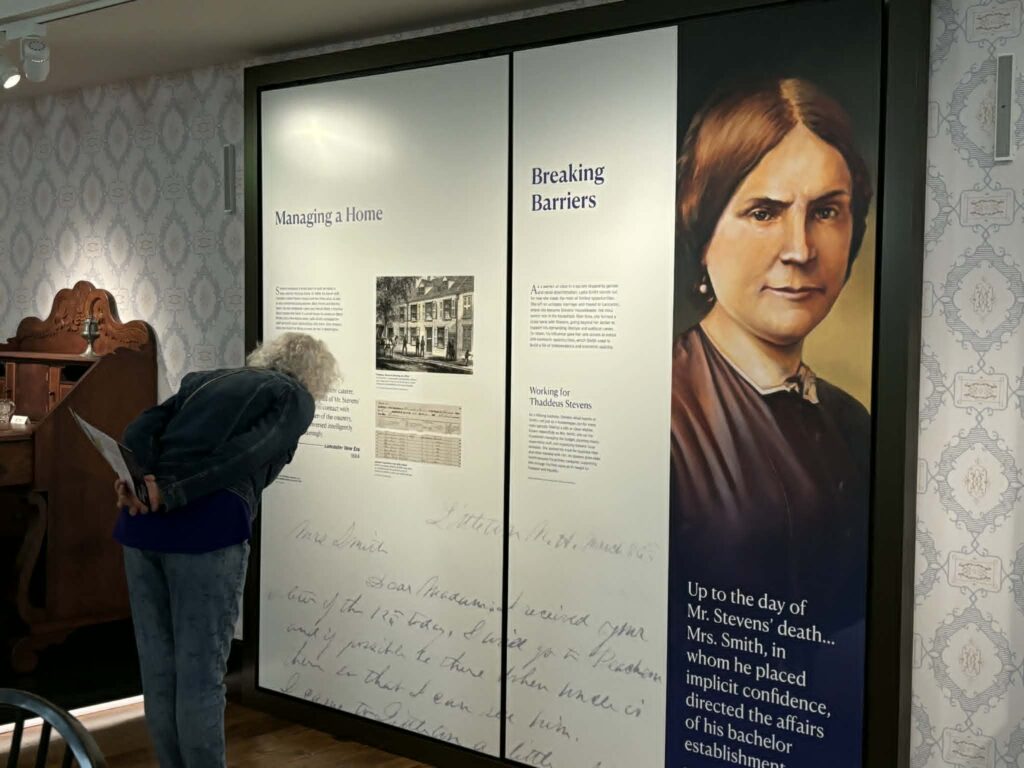
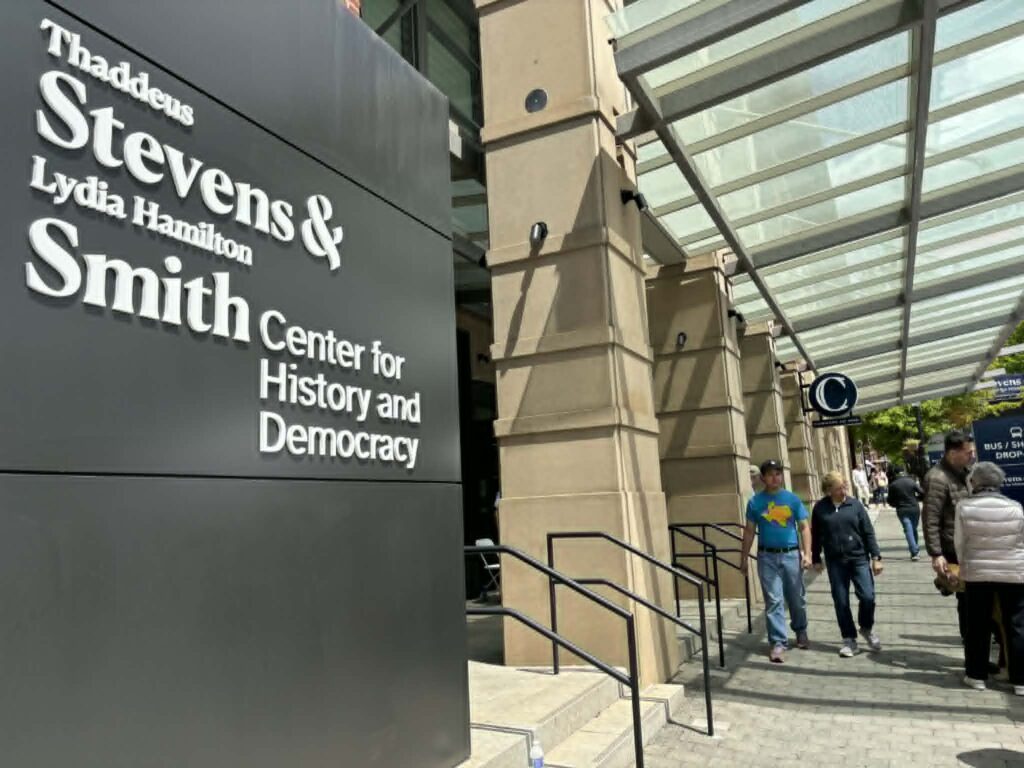
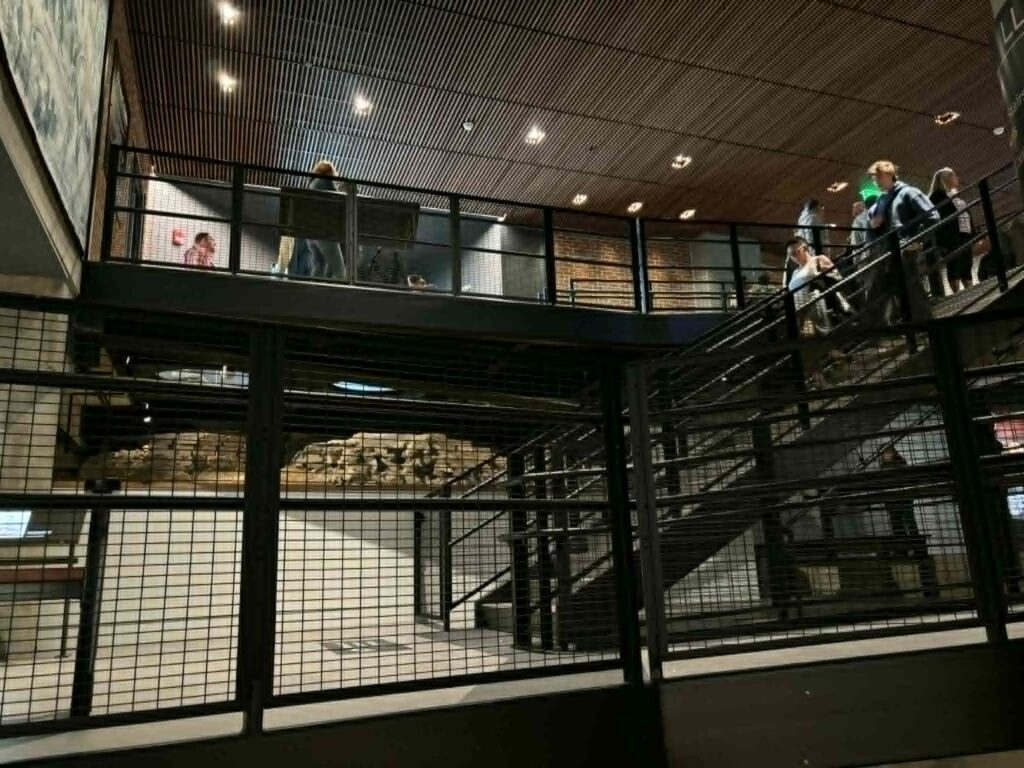
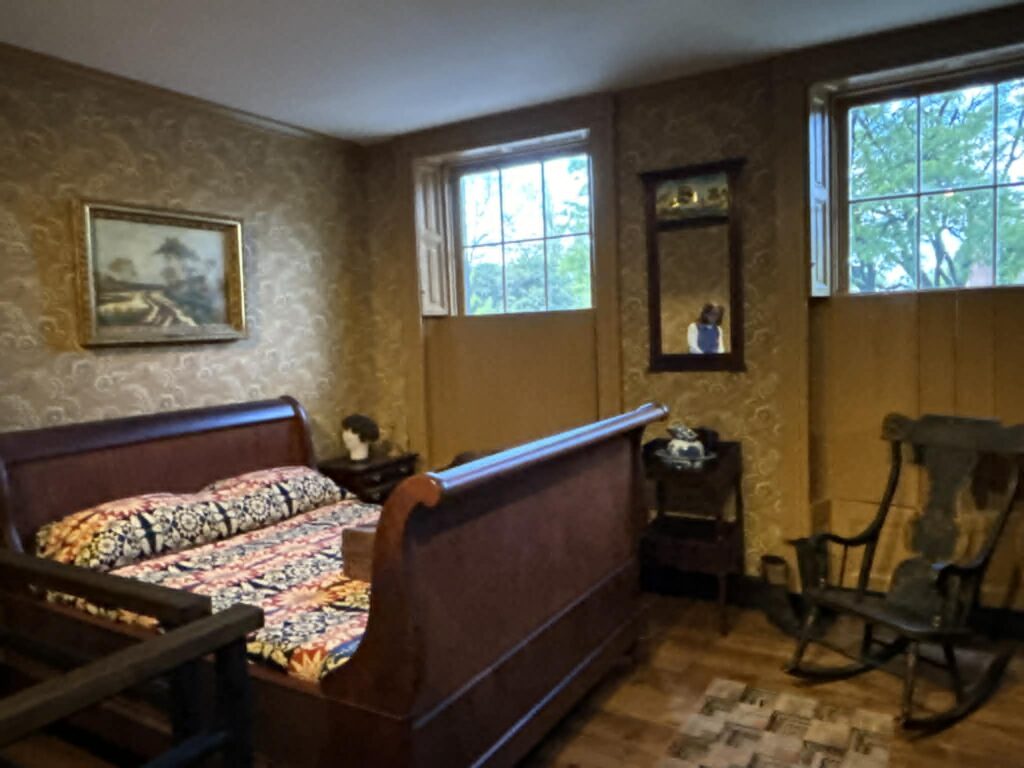
And now there’s a home base for the study of Stevens that could extend his legacy across southern Pennsylvania: Lancaster History’s newly opened Thaddeus Stevens and Lydia Hamilton Smith Center in Lancaster. Smith is the longtime manager of Stevens’ households in Lancaster and Washington, D.C.
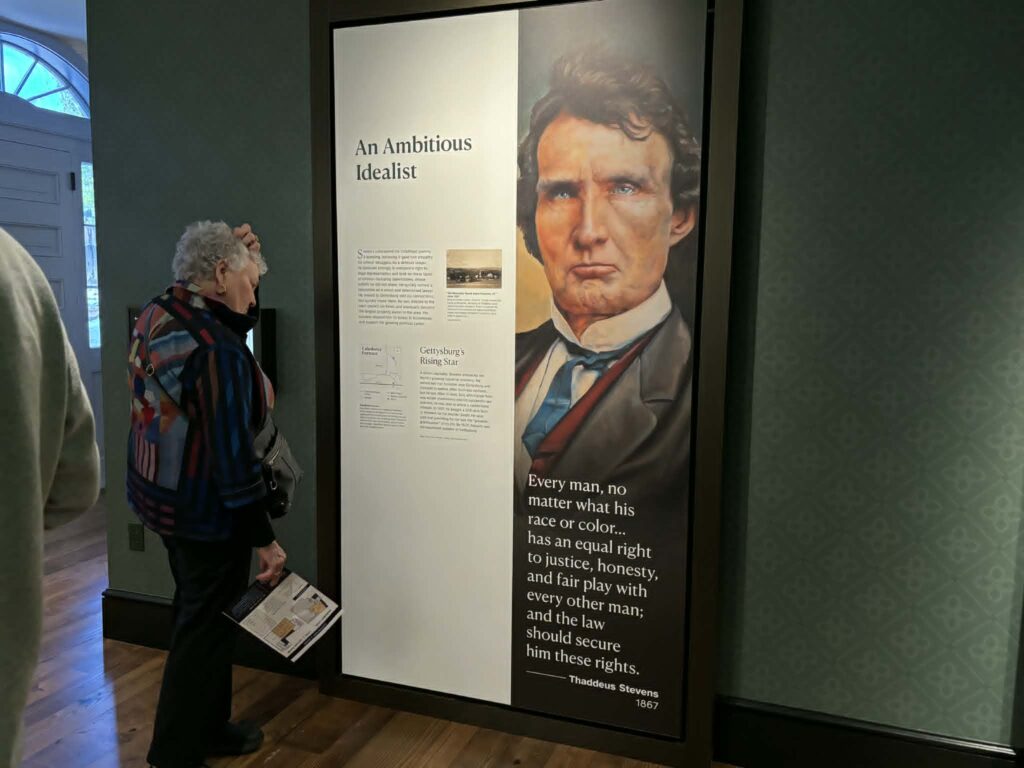
In 2017, Lancaster’s Randy Harris proposed an idea for an “Old Commoner” network: Adopt Stevens as a central character and follow him from his activities in Franklin County to Philadelphia, loosely using the Lincoln Highway corridor. That would include his political and legal work in Harrisburg and Philadelphia – and particularly his association with the Underground Railroad and abolitionism.
That network could include as characters other station operators on the Underground Railroad – William C. Goodridge, Jonathan and Susannah Wright, William Whipper and Stephen Smith.
With the Stevens and Smith Center’s doors open, Harris’ idea for a multi-county network could be developed – at least on digital platforms – with partners like the Susquehanna National Heritage Area’s Mifflin House, the Underground Railroad Museum of Pennsylvania and the York County History Center.
The witness
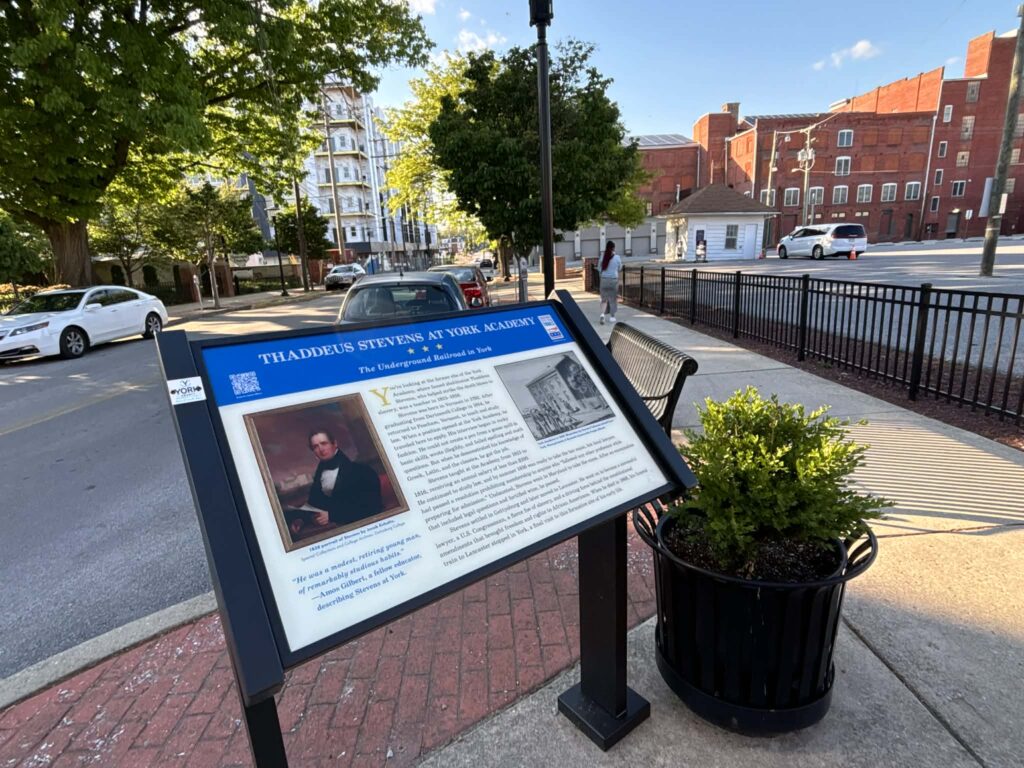
Matthew Jackson wrote a guest column for the York Daily Record shortly after “Lincoln” opened, a 2012 film in which Thaddeus Stevens received much screen time. Since he wrote this piece, a wayside marker has been installed at the North Beaver Street site of the York County Academy. And a statue of Underground Railroad operator C. Goodridge has been erected outside the Goodridge Freedom Center on East Philadelphia Street, York.
Jackson writes:
Steven Spielberg’s “Lincoln,” based on Doris Kearns Goodwin’s bestselling “Team of Rivals: The Political Genius of Abraham Lincoln,” starring Daniel Day Lewis, recently opened.
Already receiving Oscar buzz, Tommy Lee Jones plays Congressman Thaddeus Stevens, who has strong ties to York, Lancaster, Gettysburg, Caledonia and Harrisburg. Old Thad’s stock is rising fast. It’s about time.
The “Old Commoner,” abolitionist and radical Republican Thaddeus Stevens (1792-1868) was one of, if not the most effective, talented and powerful legislators in the history of Congress.
When the hapless Andrew Johnson became president after Lincoln’s assassination, the clubfooted backwoods boy raised in poverty was considered by some historians to be the de facto leader of the nation.
Upon his death in 1868, Stevens became only the third American, following Sen. Henry Clay and Lincoln, to lie in state in the Capitol rotunda in Washington, D.C.
Teacher, lawyer, entrepreneur, statesman, civil rights author, public education champion, Underground Railroad conductor and philanthropist, Old Thad led an extraordinary, courageous and heroic life.
Also bewigged, irascible, curmudgeonly, bullying, vindictive and irreverent, Stevens, who was hated by Southern slave owners and romanticists, is not your typical silver screen subject.
Yet his disability, limp, childhood poverty, fatherless upbringing and rags-to-prominence story make Stevens intriguing for 21st century audiences.
He was a consummate outsider and underdog who doggedly fought to stay out of poverty while indefatigably fighting for the little guy, the downtrodden, the oppressed and the different.
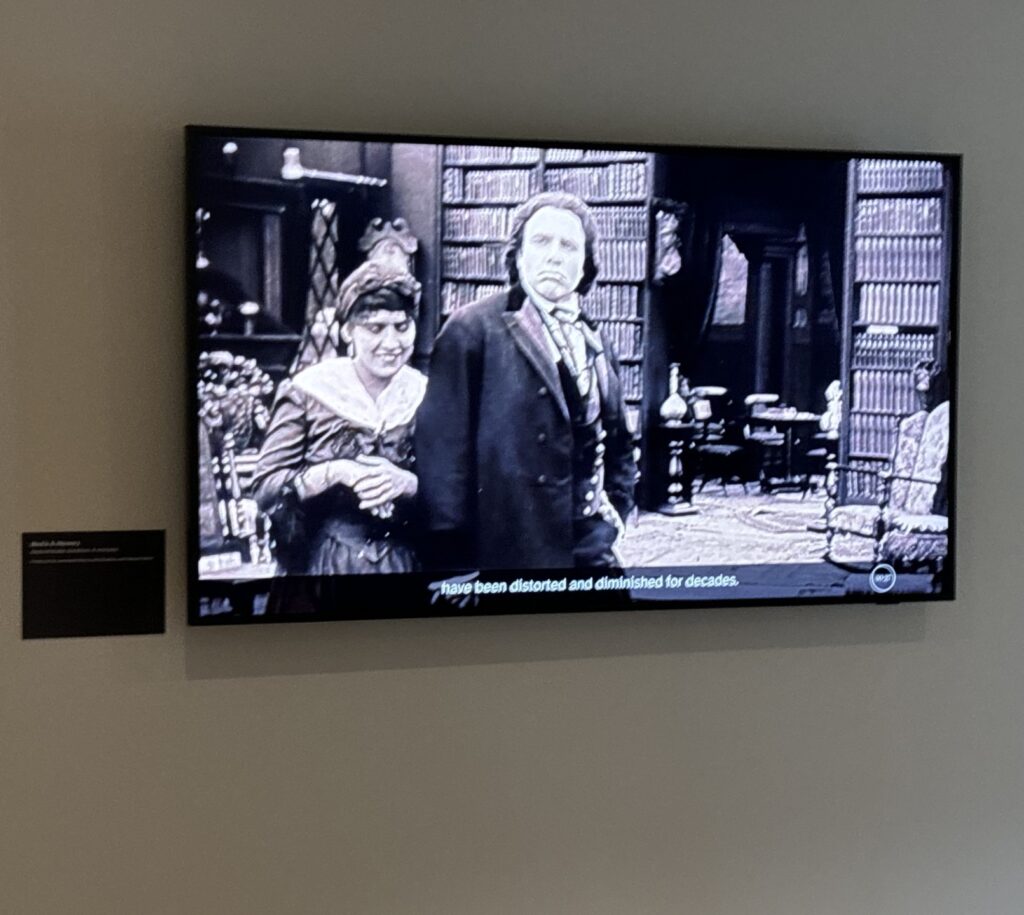
Hollywood featured Stevens twice before. He was demonized in D.W. Griffith’s epic silent film and epically racist film about Reconstruction, “Birth of a Nation” (1915). Lionel Barrymore portrayed him as a destructive fanatic in “Tennessee Johnson” (1942), which celebrated Andrew Johnson, even though historians regard Johnson as one of our worst presidents.
How will Spielberg and Jones portray Stevens?
Look for “Lincoln” to finally give Stevens his rightful due on the silver screen – morally, politically and physically.
Originally from Vermont and an 1814 graduate of Dartmouth College in New Hampshire, a young Stevens came to York where he taught at the York County Academy, at the northeast corner of Beaver and North Streets, from 1815-1816.
Founded in 1787 by St. John’s Episcopal Church, the academy was the nation’s first classical school west of the Susquehanna River.
In 1816, Stevens moved to Gettysburg, where he opened a law firm, rose to local prominence, and, from 1833-1841, served as a member of the Pennsylvania General Assembly.
At the age of 50 in 1842, Stevens moved to Lancaster, which he represented in the U.S. House of Representatives from 1849-1853 and from 1859-1868.
Light years ahead of his time and throughout this life, Stevens was an equal opportunity equal rights advocate, supporting or representing blacks, women, the physically disabled, Irish, Native Americans, Jews, Mormons, Seventh Day Adventists and Chinese in a culture slow to take up the full promise of freedom and equality embedded in the Declaration of Independence.
In 1838, Stevens voted against the Pennsylvania state Constitution because it did not give Black people the right to vote. The U.S. Constitution did not guarantee this right until the Fifteenth Amendment, which Stevens championed, passed in 1870.
On Dec. 2, 1861, Stevens was the first congressman to call for, via a resolution, universal emancipation of all slaves. This was just eight months after the war began and when the emancipation proclamation of 1863, which only freed slaves in the states or territories in rebellion, was just a gleam in Lincoln’s eye.
In 1864-1865, Stevens was a sponsor and prime supporter of attempts to pass a constitutional amendment to abolish slavery throughout the U.S. After fits and starts, the Thirteenth Amendment, which freed all slaves, passed in 1865.
After father Abraham’s assassination, Stevens was the father, principal author, sponsor and pusher of the Fourteenth Amendment, whose “equal protection” and “due process” clauses have resounded through the ages.
From black Americans’ equal rights; to birthright citizenship; to applying nearly all rights in the Bill of Rights to all states; to outlawing separate but equal public facilities, gender discrimination and race-based redistricting; to advancing privacy, women’s, immigrants’, inter-racial marriage, anchor babies’, and same-sex marriage rights, the Fourteenth Amendment is the cornerstone of American civil rights.
In a span of just five years, Congress, state legislatures, and two different presidents from two different parties passed the Thirteenth (1865) Amendment, as well as the Fourteenth (1868) and Fifteenth (1870) Amendments into law.
If politics is the art of the possible, then Stevens, who was a driving force behind the big three war amendments and who had a remarkable ability to get things done throughout his long life, was one of democracy’s greatest artists.
The Old Commoner would find himself at home in a multicultural, evolving and post-racial leaning America that largely supports equal opportunity for all.
He should, because he helped to author that America.
Old Thad is an authentic American hero and revolutionary whose legacies continue to shine bright in central Pennsylvania and from sea to shining sea of earth’s last, best hope.
Honor Stevens in York
York does not recognize the “Old Commoner” as much as it might and should. The former Stevens School on West Philadelphia Street is now an apartment house with no commemoration of Old Thad.
A life-sized sculpture of young Thad at the site of the former York County Academy and near the current York Academy, an international baccalaureate school, showing Thad Stevens as a young teacher would be a fitting tribute. For all his accomplishments, old Thad was, at heart, a great teacher – an educator of freedom and respect for all peoples, a moral instigator and a great champion for free public education for all.
York Academy students finding wisdom in different languages and cultures could find inspiration from an American trailblazer with indisputable York roots who believed in the inherent power and rights of all peoples.
A permanent exhibit on Stevens at the long proposed and still standing Goodridge Freedom House and Underground Railroad Museum on East Philadelphia – the only existing house in Pennsylvania owned by an ex-slave that served as a station on the Underground Railroad – also would be fitting.
Past pieces by Matthew Jackson here on Witnessing York: Jackson essays.
The question
Several suggestions were mentioned in this article to honor Thaddeus Stevens. In what ways should York County pay tribute to this great man’s contribution?
Related links and sources: Matthew Jackson’s guest piece above was originally published as “Thaddeus Stevens First Pennsylvania Stop” and Thaddeus Stevens might help York County’s identity crisis. Photos submitted by Jim McClure.