York County fighters march off to join American revolutionaries
Crispus Attucks mural at namesake museum
45 E. Boundary Avenue, York
The situation
Continental Congress, pushed west from Philadelphia by the British, entered York County in tattered and weary shape in September 1777.
Struggling, indeed, after days on the run, landing west of the Susquehanna River, 90 miles from Philadelphia.
But at least the spartan confines of York with its 300 homes and 1,700 residents narrowed Congress’ attention span to matter of crucial important to a fledgling nation.
So what did Continental Congress do in its nine-month stay, an occupation that coincided with George Washington’s Continental Army in Valley Forge?
- Completed and adopted the Articles of Confederation and sent this constitution, America’s first, to the 13 states for ratification. The document came to York mostly written, and Congress answered several unresolved of the 13 articles. The Articles of Confederation was signed in Philadelphia and finally ratified in 1781, but exercised the force of law before then.
- Learned about the Continental Army’s triumph at Saratoga, New York.
- Issued a proclamation setting aside a National Day of Thanksgiving and Praise in response to that triumph.
- Established a Board of War, a kind of national defense department.
- Endured the departure of leading statesmen John Hancock, Samuel Adams and John Adams about 30 days into the nine months that at Congress spent in York.
- Named South Carolinian Henry Laurens to replace Hancock.
- Hosted European soldiers Marquis de Lafayette and Baron von Steuben and sent them to significant roles; Lafayette for an incursion into Canada, and Steuben to Valley Forge, where he would help transform the Continental Army into fighting shape.
- Ratified treaties with France, bringing on a key ally whose ships and troops were crucial to America’s triumph over the British.
Congress, struggling just nine months before, returned to a British-evacuated Philadelphia in late-June in a strut, a constitution in a front pocket and treaties with France in the vest.
That nine-month period served as a moment of productivity that proved valuable to the American cause. And the war disrupted a county that labored to host Continental Congress those long days in 1777 to 1778. But there was redemption. According to one historian, changes spawned by the war transported York County from a German peasant settlement to a place that was in the mainstream of America and prepared the land on the Susquehanna’s west bank for its next chapter — the rise of the business and further advancements in agriculture in the early republic years and the 1800s.
The witness
The narrative of the American Revolution in 20 short stories … .
Crispus Attucks first to fall in Boston Massacre
One day more than 250 years ago, a crowd outside the Boston Customs House brought snowballs to a gunfight.
Those well-aimed and tightly packed snowballs, of course, presented no match for the musket balls from the guns of British soldiers guarding the building on March 5, 1770.
Three in the crowd were killed immediately, and two among the eight wounded died later.
This was the first blood spilled in the American Revolution era, and those slain are long remembered, particularly the first to die. Crispus Attucks, a freedman and sailor, would become the front man, the best-known man to die in the Boston Massacre.
Some view this violent event — part of protests targeting coercive British acts against the colonists — as the beginning of the buildup that erupted into the Revolutionary War in 1775.
About 160 years later, in 1931, an organization designed to fight the uphill battle to provide social, educational and recreational services for York County’s growing Black population was founded and took on the name of African American martyr Crispus Attucks.
+++
York in the 1770s
Don’t think of York in its fourth decade as a tidy New England town.
Think of TV westerns in which a gunslinger rides his horse into a town with dirt streets and uneven wooden houses, only that York Town, as it was then called, hosted some brick and stone structures.
Let’s imagine it’s 1776, and you’re standing in Centre Square, now Continental Square, for a minute. Look west down what became known as Market Street.
The sturdy brick Centre Square courthouse is up since 1756 in the center of the square, and the stone house, later called the Gates House, stands out westward on this main street. It stands right next to Martin Eichelberger’s Tavern, now called the Golden Plough.
York’s streetscape is gap toothed. Well, it has more gaps than teeth.
Indeed, not all the lots are built on. Back and side yards served as places for livestock to graze.
Running water wouldn’t come until 1816, after the Codorus Creek, a couple of blocks westward from the square, became too polluted from sewage and commercial waste.
There are outhouses, but household and human waste of all sorts finds its way into the streets and then into the Codorus.
In 1776, York simply was a frontier town, a German village standing on the edge of America.
It was found largely wanting of amenities and fellowship by visitors, including the Continental Congress visiting here in 1777-78.
One 1773 visitor, Alexander Graydon, found time for fowling, riding or strolling along the Codorus, “a beautiful stream that passes through town.”
In those times in which a visitor sought to engage with most townspeople, he likely would have received a response in German, the common language in those days in York. Indeed, York College’s Paul Doutrich wrote that York before the war was akin to a German peasant town.
+++

York’s early responders march to war
The shot heard ’round the world in 1775 — the clash between American and British fighting men at Lexington and Concord outside Boston — could be heard in York.
A militia unit, organized from the corners of York County and later known as the York Rifles, gathered in the county seat in late June to begin a trek to the siege of British-held Boston.
Newly minted Continental Army Gen. George Washington needed reinforcements to keep the British army pinned down in the city, and the York County men headed to Boston on July 1. They arrived and reported for duty on July 25, a march of more than 400 miles.
The York Rifles were known for their marksmanship, deploying Pennsylvania long rifles, better known as Kentucky long rifles.
Under future York chief burgess Henry Miller’s leadership, they gained the attention of the Continental Army’s officers and their peers, distinguishing themselves by frustrating the red-clad British with their deadly sniping. The men of the York Rifles would serve with distinction in many key Revolutionary War battles, and the unit would live on to fight another day – in the Civil War.
+++
Was York County patriotic?
The response of the York Rifles to the call for reinforcements in the Continental Army’s siege of Boston in 1775 is one indicator that patriotism ran high in York County in the early years of the Revolutionary War.
And there were other indications. The two most influential county leaders in the war era, James Smith and Thomas Hartley, were super patriots. Smith signed the Declaration of Independence, and Hartley served as an officer under his friend George Washington.
Then there were celebrated cases — overexuberant and harmful, as it turns out: Residents dunked the Rev. Daniel Batwell in the Codorus Creek. Batwell had vowed loyalty to the British Crown as part of his ordination as an Anglican priest.
And a young Mennonite boy, a pacifist who was outspoken against the war, was sentenced by the county Committee of Safety to be tarred and feathered. The committee did not show up to carry out the sentence, and one vocal resident directed the youth to tar himself. The youth applied tar to his shoulder, someone from the crowd ripped open a pillow, but the feathers missed him.
Researchers of the York County History Center’s “Revolutionary York” exhibit believe more than 4,000 York County men served in militia units or with the regular army in the war. The county population stood at 27,000 at war’s end. Half of that census were men, and a large percentage of those men were too old or too young to fight.
Patriotic York County, thus, was well presented on the battlefield.
.+++
Jefferson slept here
Thomas Jefferson passed through York County in April 1776, on his way to strike a blow to British tyranny with his pen.
He stayed overnight on April 12 at the Sign of the Horse in Hanover. He had started his trip from his home, Monticello, with a destination of Philadelphia where he would join the Continental Congress. Hanoverians Matt Jackson and John McGrew, both of whom wrote about this visit, noted that he arrived in Hanover in time to get a haircut.
After departing Hanover the next day, he moved at a fast pace, eating breakfast at White’s Tavern in York and spending the next night in Lancaster.
Two months after his York County visit, Jefferson served as the primary drafter of the Declaration of Independence, serving on a committee with John Adams, Benjamin Franklin and others.
Other luminaries would pass through Hanover, with its position on the Great Wagon Road connecting Philadelphia with the South.

+++
Statesman offers three-part plan
Statesman Richard Henry Lee scored a three-cornered hat trick on June 7, 1776, in Philadelphia.
Lee, one of the influential Lees of Virginia, introduced a resolution in the Continental Congress proposing the independence of the 13 American colonies.
The hat trick comes from his three-part proposal for independence against British rule in the American Revolution: a declaration of independence, a plan for confederation or constitution and a call for foreign alliances or treaties.
America gained ground on all three proposals.
Within a month, Congress adopted the Declaration of Independence. Within about 16 months, Congress had adopted a constitution: the Articles of Confederation. And within two years, Congress ratified two treaties with France.
The Declaration, as we know, was put forth in Philadelphia.
The latter two of Lee’s proposals were completed when Congress was meeting in York County in 1777-78. Congress adopted the Articles and sent the document to the 13 states for ratification, and delegates ratified two treaties of alliance with France about five months later.
York County scored several ties with the Declaration of Independence. Signers James Smith of York and Philip Livingston of New York served in the Continental Congress when it met in York. And 24 other signers served in Congress in York.
+++
America declares its freedom
When Richard Henry Lee called for a Declaration of Independence on June 7, 1776, he reasoned “that these united colonies are and of right ought to be free and independent states … .”
That “free and independent states” language was carried through on July 2 when Congress adopted a resolution for independence.
Delegate John Adams believed the July 2 date would become celebrated and wrote his wife, Abigail, with that prediction: “I am apt to believe that it will be celebrated by succeeding generations as the great anniversary Festival.”
That simple July 2 resolution for independence wasn’t enough, and Congress knew it would need to explain its action in words that the American people, France and other allies would hear.
Delegates wanted to spend more time assessing and editing the declaration document written chiefly by Thomas Jefferson.
They took it up on July 4. The delegates edited and debated it and then agreed it was ready. They sent the final document, the Declaration of Independence, to printer John Dunlap that evening, all 1,320 words of it.
The printed edition would be sent out to the states, and America’s founders would sign the familiar copy in fine handwriting on Aug. 2.
The Declaration of Independence also included the words “free and independent states.” In fact, two times
The 13 colonies were now states.
And July 4 would become the day that independence was declared and celebrated ever since.
+++
James Smith, super patriot
James Smith, already a busy lawyer in York County, wore numerous patriotic hats in the American Revolution era. He was a leader in mustering local militia and supported the York Rifles, an early responder, as the war clouds darkened in 1774 and 1775.
In May 1776, he served on a committee to draft Pennsylvania’s Declaration of Independence. Pennsylvania and other states needed to draft their own declarations before a national act would take place.
Smith delivered the Declaration to York after its adoption on July 4, 1776. He then returned to Philadelphia where he served in the Continental Congress, signing the finely hand written Declaration with other delegates in early August 1776.
At the same time, he served as delegate to the Pennsylvania Constitutional Convention.
York County heavily favored America’s side in the battle against Britain, and James Smith’s steady influence served as an example of what patriotism represented.

+++
Declaration reaches York
Continental Army Capt. Francis Wade of Delaware and one Dr. Young accompanied James Smith to York Town on the evening of July 6, 1776.
The three men had traveled from the bustling city of Philadelphia to host the reading of the Declaration of Independence and glean the public’s reaction to the document.
Four militia companies gathered in York Town, joined by 300 to 400 old men, women and boys. The women, mainly Germans, looked on with as much interest as the men.
Wade and Young made short speeches, followed by a reading of the Declaration of Independence. Smith, a prominent York Town attorney, briefed the audience on the advantages of independence and concluded by throwing his hat into the air, cheering for liberty. Those gathered did the same.
Young John Adlum, who donned a uniform soon thereafter, gave this account in writings years later. If the July 6 date is correct, the Smith party would have secured the printed Declaration of Independence on July 5 and reached York the evening of July 6. Possible, but they would have been pushing it to reach York in two days.
“I do not believe that the majority, men and women,” Adlum wrote of those assembled, “knew what independence meant.”
He might have sold his fellow York countians short. The town emptied out of military-aged men who marched east to serve in Continental Army units.
+++
Declaration built on tension
Some of the signers of the Declaration of Independence did so amid a tension.
The document they penned their names to in Philadelphia stated that: “We hold these truths to be self-evident, that all men are created equal … .” Yet enslaved people worked on some of their properties back home.
For York countians in 1776, enslavement wasn’t something that was just happening elsewhere. In 1783 — the last year of the American Revolution — York County residents enslaved 520 people.
In 1790, that number totaled 499 people, highest in Pennsylvania. And the freedmen counted in this first U.S. census stood at 837, second highest in the state after Philadelphia. That number was slowly diminishing after the Gradual Emancipation Act was adopted in the state in 1780.
The paradox was underscored in 1777 when South Carolina’s Henry Laurens took over the presidency of the Continental Congress meeting in York. He was a slave trader and a major enslaver, addressing issues involving those in bondage back home even while he headed Congress.
At the same time, he was the glue that unified Congress in the toughest of times, serving all nine months that Congress met in York, one of three delegates to do so. America — and York County — was built on this tension between freedom and enslavement.
Some scholars have pointed out that the Declaration held out the prospect of freedom for all, though leaving slavery in place at the time of the signing.
+++
York’s ‘life of all gaiety’
With military age men heading to battle after the Declaration of Independence was read in York, women, old men, girls and boys operated farms, businesses and households.
Shinah Etting was one of those women in York, a leading businesswoman.
Alexander Graydon, later a well-known lawyer, spent part of a summer in the Etting household in 1773. He studied law under James Smith, a patriot, and Samuel Johnston, a loyalist.
As described in his memoirs, Graydon found a hospitable reception unavailable in the quiet German village of York, except at the Ettings, a Jewish family.
“Those who have known York … cannot fail to recollect the sprightly and engaging Mrs. E.,” he wrote, “the life of all the gaiety that could be mustered in the village: always in spirits, full of frolic and glee, and possessing the talent of singing agreeably … .”
Shinah and her husband, Solomon, kept out the shingle through the war’s early years. Two years after Solomon’s death in 1778, Shinah and her children moved to Baltimore. The Ettings would become a leading Baltimore family.
.+++
A Christmas letter home to York
A letter from James Smith, then serving in Congress, to his wife Eleanor on Dec. 31, 1776, tells us many things.
Smith was in Baltimore, chased there with the British presence near Philadelphia. Life was uncertain for America’s founders in the America Revolution. So when Congress once again evacuated Philadelphia to York nine months later, they were used to life on the road, however grudgingly.
And notice this is Christmas, and Smith is away from his wife and five children in York, their separation part of the price for freedom.
He relayed the good news of the rare George Washington-led victory over the British in the surprise attack on Trenton.
A hearty welcome in Baltimore cheered him as word spread. “ (T)he agreable News from Genl. Washington has given new life & spirit to every body here.” A flag of one of America’s foes — the mercenary Hessians — had made its way there.
He needed more clothes: linen, two shirts, a night shirt, his red jacket and a blue coat. He marked out one item on the list: slippers.
Baltimore, he wrote, is “much more Sociable than Philada.”
He signed his letter: “Your loving & affectionate Husband Jas. Smith.”
+++
From struggling to strutting
In September 1777, the British won the Battle of Brandywine, converged on Philadelphia and caused delegates to Continental Congress to flee, really, for their lives.
By month’s end, members of Congress straggled into York after days on the run. They pulled themselves together and met in the county courthouse in York’s Centre Square.
They would be there in York for nine months, 26 Declaration of Independence signers among 64 delegates.
With little to do in this frontier town, they focused on their work, facing three major issues before they could gain confederation:
How many votes would each state get on legislation? Would Congress assess property or the number of people for the states to use in covering war debts? And why wouldn’t Congress come to the aid of some states that covered a small geographical area by setting boundaries on western lands?
Congress decided each state would get one vote, property would win out over per capita and it would kick the decision on Western lands down the road.
Delegates adopted the Articles of Confederation on Nov. 15 and sent the document to the states for ratification. The signing of the handwritten articles did not take place until Congress returned to Philadelphia in July 1778 and ratification came in 1781.
In fact, Congress returned to Philadelphia strutting. France was now an ally, and America’s future against the British was much improved compared to nine months earlier.
+++
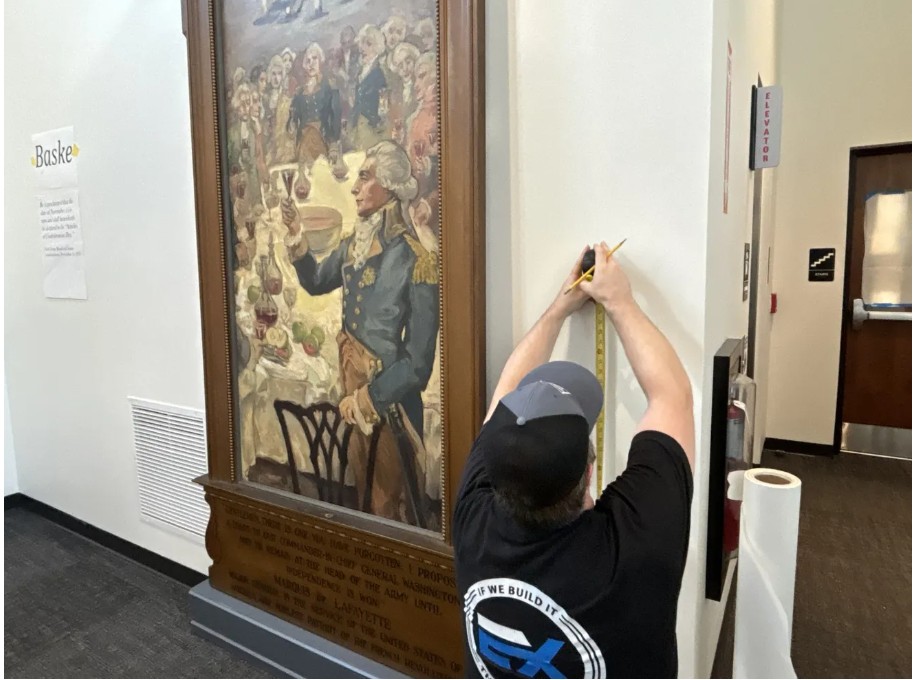
Congressional visitors settle in
Timothy Pickering was one of the scores of visitors to converge on York in the nine months that Congress met there, from September 1777 to June 1778.
Soldiers marched in. British and Hessian soldiers prisoners, walked through, under guard. Military messengers traveled back and forth from Valley Forge.
Wartime housing was scarce and prices were high. Many of the delegates grumbled about their conditions. One delegate cautioned another back home not to bring his wife into such living conditions.
The people of York endured the same conditions, but at least the town had activity after months with their fighting men away in distant camps and battlefields.
Pickering, a member of the Board of War, was fortunate. He lodged with the Widow Mihmims.
“I have not felt so much at home since I left Salem (Mass.),” he wrote. “She lived all alone and now sets from morning to night at her spinning wheel, which, by the way, is a very modest one. And when I am at home writing or reading, it gives me no more disturbance than the purring of a cat.”
Pickering’s experience in Pennsylvania must have been positive all around. After the war, he moved to Luzerne County and represented his region in the Constitutional Convention in 1787 in Philadelphia.
+++
The ultimate cost of war
The gloomy winter was behind and a brighter future lay ahead for Continental Congress in the spring of 1778. The new nation had just scored treaties with France, the longtime powerful foe of Britain.
But the fortunes of Declaration of Independence signer Philip Livingston were not as bright. His health gravely concerned him and his family as he prepared to journey from New York to join Congress in York.
But duty called this member of a prominent political family that was akin to the Kennedys today.
He arrived in York, and his health deteriorated. He died in the line of duty and was given a state funeral at the German Reformed Church.
He was buried in the church cemetery on East Market Street and later his remains were moved to Prospect Hill Cemetery. His family still visits his gravesite.
“He was not in good shape,” a descendant said during a York visit two centuries later, “He felt this was going to happen. He said his farewells to his family because he didn’t think he’d make it back.”
Revolutionary War drew objectors
York County was patriotic in the American Revolution, but that enthusiasm for the fight for freedom was not unanimous.
From the war’s earliest days, Moravian pastor George Neisser reflected concerns for members of his congregation, a group that generally held pacifist beliefs.
Some of his congregants enlisted in Continental Army units, but many adhered to pacifism. Pacifism in time of war is a principled position, and certainly not an easy one, as Neisser outlined in regular journal entries.
In 1781, a prisoner-of-war camp, Camp Security, went up east of town, and British prisoners roamed the streets of York. Authorities allowed them parole within prescribed distances of the prison camp.
Those redcoats became a nuisance and worse.
Neisser said they tormented — abused in modern terms — his congregants and no doubt other York residents.
“This afternoon Mrs. Maria Billmeyer called,” he wrote, “who deplored the wickedness of the British officers and their servants, who act like brutes, and curse those who do not submit to their lustful desires.”
The pastor and his congregation remained faithful to their calling through war’s end. And concern for the war’s impact never subsided.
“I visited a blind negro woman and comforted her yesterday; she was insulted by a soldier,” Neisser wrote in 1783, “and had become much excited. The soldier was soon after thrown into prison for other excesses.”
.+++

After the war, wounds linger
Jacob Barnitz saw his commander, Capt. McCarter from Hanover, linger in pain from a chest wound sustained in fighting in New York in 1776.
Resting at his side, Barnitz watched the officer die, even as he, himself, was fighting wounds in both legs.
Barnitz had almost met his death earlier. An enemy soldier, a Hessian, was about to finish off the wounded flag-bearer with a bayonet thrust, but an officer intervened. He somehow survived his wounds and returned to York. He old wounds continued to cause excruciating pain.
Years later, the surgeon won the battle. Barnitz lost a leg and gained another permanent reminder of New York’s Fort Washington. He kept the British musket ball that had cost him his limb.
Barnitz was not alone in living with his wounds in York.
In fighting around Philadelphia, an enemy bayonet found David Grier, entering his side and penetrating up to his breastbone. He return to York and served in the quartermaster’s office and later in public office. But the lawyer never regained his health. He died in 1790 at the age of 49.
Fighting never reached York County soil, but the scores of wounded men returning to York showed that the bloody Revolutionary War, indeed, had reached county soil.
+++
Making an imprint on York
How is the American Revolution remembered in York today? Just about everywhere you look in the city, Revolutionary War names emerge.
Continental Square is the place that north meets south and east meets west.
The newly restored main hotel is the Yorktowne. The York Revolution is the championship baseball team. Indeed, you can probably find a good 20 businesses that play on Revolutionary War themes: first capital, colonial or colony and more.
A statue of Marquis de Lafayette offers a toast outside the Gates House and Plough Tavern, structures standing at the time of the American Revolution.
A marker celebrating Lafayette’s second visit to York in 1825 is one of several blue-and-gold historical markers around Continental Square. It marks the Globe Inn where townspeople toasted Lafayette about 50 years after his first visit.
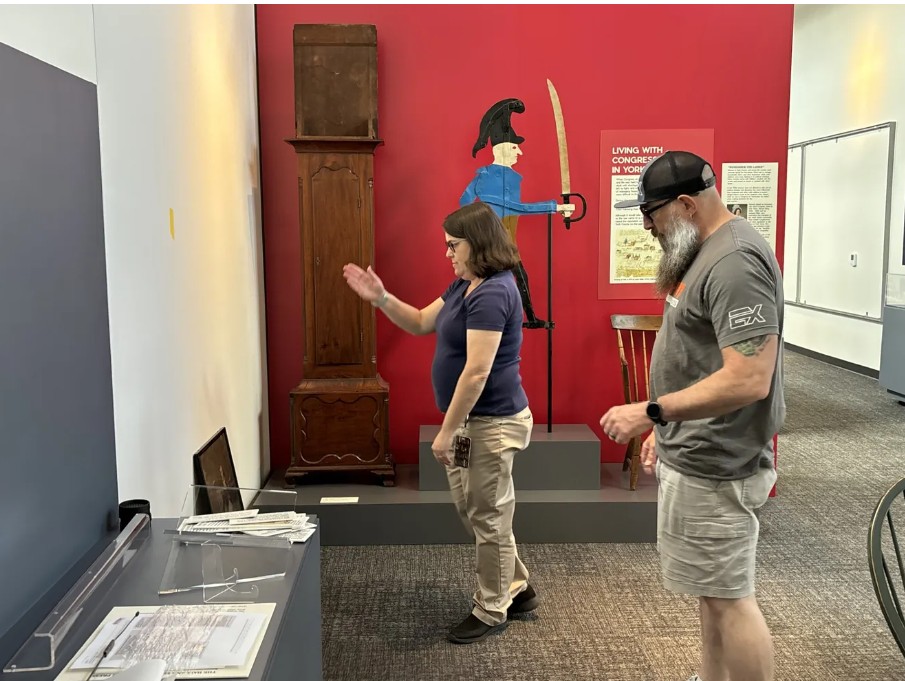
Eighteen large outdoor panels were part of the Murals of York series painted around 2000. Three of the murals are devoted to or feature American Revolution themes: the Articles of Confederation, the printing press operated during Congress’ York visit and York County’s 250th anniversary mural in 1999.
And then there are the streets: King, Queen, Princess and George.
Some years ago, a concerned York resident lobbied to change the royal street names. America, he argued, did win the war.
But long tradition triumphed over super patriotism, and the street signs were not changed.
+++
Colonial-era buildings scarce
Considering the York area’s longtime identification with the American Revolution, some people might conclude that its houses and buildings would come from that era, too.
But in the city, the housing and red-brick factory buildings were built in the Victorian era, coinciding with the Industrial Revolution period of about 1880 to 1930.
Hundreds of stone and brick buildings from the 1700s can be found around York County. But relatively few standing today connect directly to the American Revolution.
The Cookes House, a 1761 home where Thomas Paine lived and worked, is perhaps the best known.
Johannes Guckes built a new fine stone house on his farm along with two mills on the Codorus Creek. It’s one of the oldest houses in York County.
The sturdy house is most known for a visit there by Paine, a patriot and pamphleteer, in 1778. According to tradition, supported by recent research, Paine stayed and wrote there, his fiery writings fueling the American Revolution from the bank of the Codorus Creek.
+++
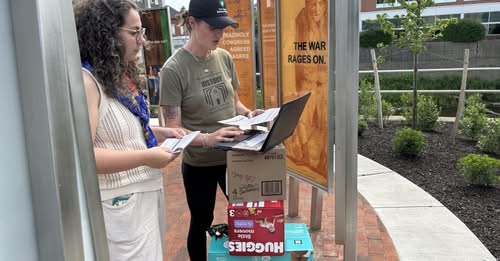
York County’s celebration to cover two years
No county of similar size, Thomas Hartley claimed, produced more soldiers and lost more men than York County in the American Revolution.
That’s a tough claim to verify, but more than 4,000 residents served in uniform.
Indeed, the county did recruit thousands, bury its dead, care for its wounded, accommodate a demanding Continental Congress, host visiting troops and endure threats of British raids.
Further, it tolerated a POW camp, Camp Security, filled with some unsavory sorts.
But memories of many contributions lingered, grew and are part of America 250 talk: the York Rifles marching, James Smith’s signing of the Declaration of Independence, adopting the Articles of Confederation, proclaiming the National Day of Thanksgiving, hosting the intriguing Conway Cabal and ratifying treaties with France.
Now, these would never be forgotten — much remembered in America 250.
And importantly, York, a simple German frontier town before the war, was now part of the American mainstream, according to historian Paul Doutrich, ready to embrace the challenges of the nineteenth century.
When America’s future hung in the balance.
York PA women played key role during Continental Congress stay here.
America at 250 is not so old that we are beyond learning
The human side of Declaration of Independence signers in York PA
York County PA soldiers marched to war in Boston 250 years ago
The question
War expedites change in a community. The American Revolution did just that in York County. Have there been other moments in York County’s story in which war and other conflicts have catalyzed change, however painful those events proved to be?
Related links and sources: Jim McClure’s Nine Months in York Town; These American Revolution sites can be visited today in York County; An overview of York County in the American Revolution, Photos courtesy: Top, in viewer, York Daily Record. Other photos, Jim McClure.
— By JAMIE NOERPEL and JIM McCLURE