Business of York County becomes business, helping others
York County Almshouse, other community icons birthed
251 N. Broad St., York
The Situation
The multi-generational Small family’s story reflected that of countless York countians in the 1700s and 1800s.
It’s a story that began with a German immigrant Lorentz Small, who took up farming in Windsor Township in 1743.
Lorentz’s son, Killian, initially followed his father on the farm. And he took a half-step away from the soil, using fallen timber and baked clay to build sturdy brick structures — the original York County Court House, for example — that would help turn the German village of York into a borough just after the American Revolution.
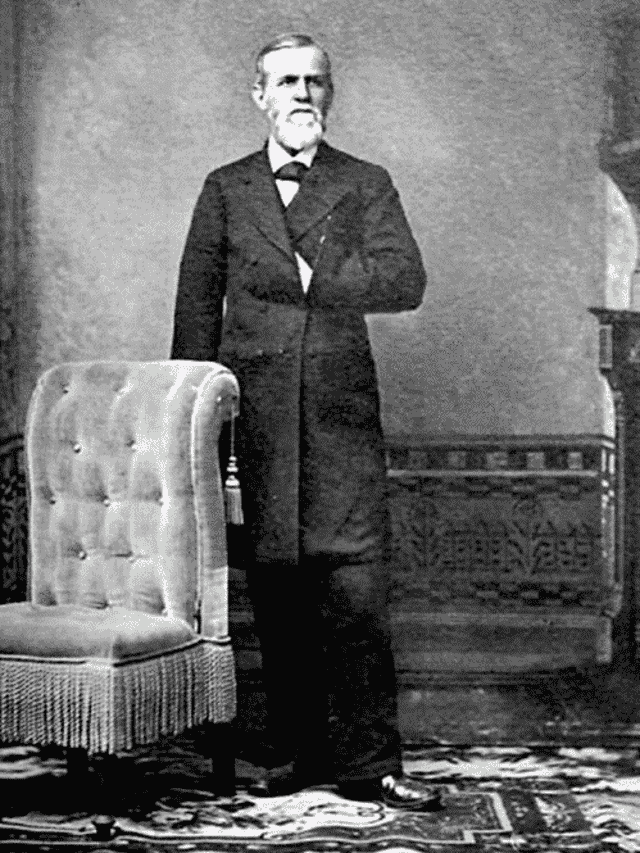
One of Killian’s sons, George, became a leading businessman running a lumber yard and store in the early 1800s as well as a builder of the York County Almshouse and Christ Lutheran Church. And George’s two of George’s sons, P.A. and Samuel, headed the most successful business in York County in the 1800s.
But the business of York County in the 1800s wasn’t only business.
Service groups that would focus on human needs emerged in those years before the Civil War. The York County Almshouse is one. The community-wide Dorcas Society, made up of women from York area churches, is another. A group of women involved in community work, the Ladies Aid Society, formed in the early months of the Civil War to serve the military camp operating on the York fairgrounds. And the YMCA formed in 1855 to feed the minds and souls of young men in the community.
The business class and budding factories would often come together with social service workers, of course. The business community provided financial and sweat equity to help birth York County’s great community organizations. Those service organizations, in turn, would aid workers of these businesses. The York County community, indeed, was under construction in the early 1800s.
The Witness
A decade-by-decade look at the development of York County in the antebellum period follows … .
1800 to 1810: Times a-changin’ in York County
York, in the first decade of the 1800s, experienced the changing of the guard.
Two of its most influential leaders – lawyers Thomas Hartley and James Smith – died that decade.
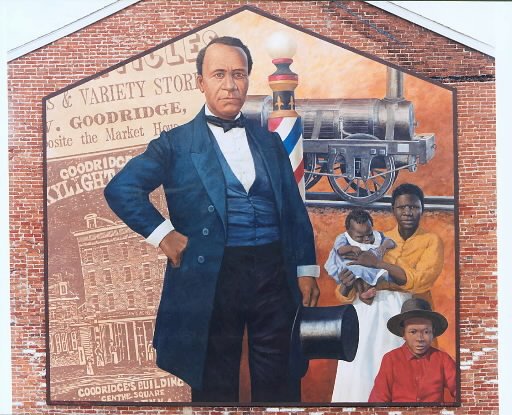
York County’s veterans of the American Revolution were passing away. New leaders were emerging, and they were at the top of a growing business community. George Small opened a hardware store on the northeast corner of York’s Centre Square. His family would be leaders in the 1800s – and descendants are leaders in York well into the 21st century. And William C. Goodridge, a business leader in the middle of the 1800s, was born this decade, enslaved on a plantation in Maryland.
This decade might remind you of the 2010s and our current decade. Baby boomers are retiring or nearly so – and another generation of leaders are leading.
Two summaries of the lives of Smith and Thomas Hartley from Jim McClure’s “Never to be Forgotten” follow:
1800: A new century opens with the passing of one of the guard. Thomas Hartley, one of the most prominent county residents of his day, dies and is buried in St. John’s Episcopal Cemetery. He was a lawyer, Revolutionary War officer,state legislator, member of the state convention that adopted the U.S. Constitution in 1787 and the county’s first U.S. congressman. He was elected to Congress in 1789 and served until his death. The Federalist was the first state lawyer admitted as counselor before the U.S. Supreme Court. “He was a fluent speaker, energetic, determined, and independent in judgment, although somewhat vain, pretentious, and high spirited,” a biography said. Pennsylvania Sen. William Maclay described him as a “strange piece of pomposity.” The early years of the new century find the passing of many of the county’s prominent founding fathers.
1806: James Smith, the county’s only resident signer of the Declaration of Independence, is buried in York’s Presbyterian Church yard. The Irish-born Smith was a lawyer by profession who was active in county business, political and military affairs — one of the most prominent county residents of the 18th century. Fire destroyed his law office and most of his papers a year before his death, taking a complete record of his accomplishments. “Though regarded as somewhat eccentric, Smith was noted for his sharp wit, lively manner, and unusually retentive memory,” a biographer said. “An excellent conversationalist with a large store of anecdote, he drew around him many friends, especially prospective lawyers who read in his law office.”
Imagine this
Fires were a big problem around the borough of York in the early 1800s. They had been a problem for years, with log fires in ill-built fireplaces the mode of heat. Indeed, York Water Co. was founded in this century’s second decade to, in part, provide running water to fight fires.
If you were walking around York’s Centre Square in 1805, one major blaze would have gained your attention. There was a day that James Smith’s South George Street law office went up in flames. This fire in the office of York’s most noteworthy citizens would have attracted a crowd. It took most of his papers, so the world little understands the life of York County’s signer of the Declaration of Independence. To this day about 220 years after James Smith’s death, no master’s level thesis or dissertation has been penned on James Smith, in part, because the best primary material about Smith were burned to a crisp.
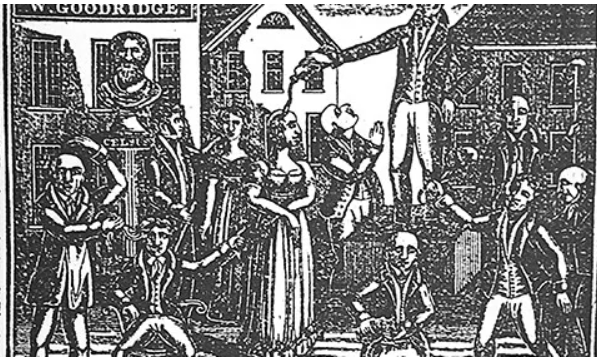
Yet another fire – or series of fires – are part of the York record this decade. The Conspiracy of 1803 erupted, and today is viewed as the first recorded large-scale racial protest against injustice by York County’s considerable free and enslaved Black population. The protest came in the form of a series of barn fires reportedly ignited by Black people in response to a real or perceived injustice. The moment ended in the imprisonment, banishment or travel restrictions on a group Black people in York County.
+++
1810s: When clean water flowed into York
It was just one line in a newspaper in 1816, but it said a lot:
“Fresh wholesome water has been conducted into town this summer, in pipes, a distance of two miles.”
That means that as population and commerce increased, the water used by York residents was no longer healthy. The source was no doubt the Codorus Creek, the receptacle of drainage from outhouses and tanneries – and streets that had, for their part, received waste of all types from homes.
So up went the York Water Co., with a goal also to provide a ready supply of water for fire prevention – as we’ve seen, a longstanding problem in the community.
As explained in this excerpt from McClure’s “Never to be Forgotten:”
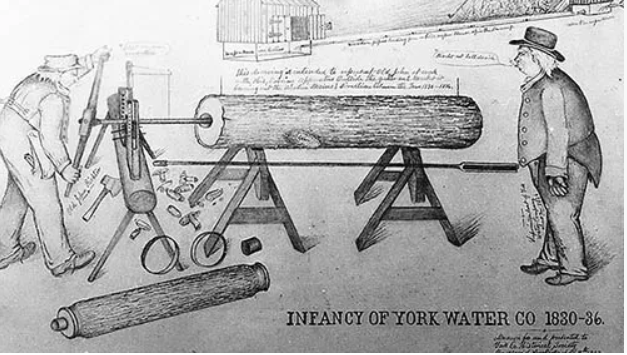
Water reaches York via log pipes, courtesy of the newly formed York Water Company. The water comes from springs in Baumgartner’s Woods near present-day Penn State York. Gravity brings the water to a reservoir on the southeastern side of town. The water then flows through 3- or 4-inch holes bored in wooden pipes into the downtown. The nagging fear of fire drives construction. Increasing population perhaps is making water from closer supplies, including the Codorus Creek, unfit for drinking. By this time, York-area residents can afford what previous generations would have considered a luxury — running water. By the end of 1816, 55 people enjoy water in their residences. The town’s residents are proud of their new water system. “York is rising into one of the first inland towns in the U.S.,” a newspaper reported. “For beauty of situation, salubrity of air, there is not one that excells (sic) it. No place has encreased (sic) more within the last ten years, and no where has the spirit of improvement more activated the citizens and no where has it achieved more. Turnpike roads lead from the town in almost every direction. Fresh wholesome water has been conducted into town this summer, in pipes, a distance of two miles.
Imaging York in 1816
You could walk its line from the wooded hill above York. Wooden pipes carried spring water about two miles into a reservoir near Queen Street and then farther west to Continental Square. If you arrive at Centre Square on the right day in 1816, you would see an unveiling, or perhaps an unplugging.
York’s luminaries George Small, Peter Small and others were there.
George Small, the successful businessman, placed a tin pipe in the trunk of one of the logs. He wanted to see how high the water would spurt.
It spurted, indeed, forming a fountain about 2 1/2 times the height of a man, according to artist Lewis Miller, who captured the scene.
“George was very attentive, which I shall never forget,” Miller wrote.
By year’s end, 35 homes had water.
Two hundred years later – in 2016 – York Water Co. celebrated its 200th anniversary.
+++
1820s: York isolated? Not in the 1820s when controversy came here
Some people today believe York’s greatest strength is that it’s one or two hours from everything.
That was true in the 1820s, too. Well, not two hours. But people came and went along the many dirt, rutted roads that crossed in the borough.
In the period from 1820 to the Civil War – to choose one period – many people arrived in York and the surrounding towns with something to say.
That includes social reformer Lucretia Mott and Underground Railroad operative Harriet Tubman.
Their presence controverts the notion that you’ll sometimes hear that York was a backwoods, isolated community for much of its history. In fact, some of the visitors were women with a message for the public. It was rare for women to make public addresses on political topics in that day.
Here’s a story of one of those messengers from 1828, courtesy of Jim McClure’s “Never to be Forgotten”:
Anne Royall, an outspoken journalist who travels the country writing about her experiences, visits the county. She finds the Globe Inn to her liking but focuses on Judge Ebenezer G. Bradford, a native New Englander. Now, this pioneer woman journalist likes to poke at New Englanders. “It is much to be lamented that these Pennsylvanians are not more particular in their choice of rulers,” she previously had written. “Having so much good sense and honesty among themselves, it is surprising they pick up those Yankee outlaws whom they exalt from selling tin buckets and horn flints to the Bench!” At the courthouse, she makes a speech before the judge where she warns of Yankee peddlers dispensing justice. “They gazed at me in astonishment — it never came to their heads that Pennsylvanians would make as good judges as Yankees,” she wrote. Her comment is a bit unfair. Native county residents before and after Bradford served as judges.
Imagine this:
In the 2010 “Journal of York County History,” Penn State York’s Jane S. Sutton describes the visit of social reformer Frances Wright to York in 1836. Wright spoke outside the brick York County Courthouse in York’s Centre Square, the same place that Continental Congress gathered in 1777-78, after also being chased from Philadelphia because the crowd “objected to a woman speaking in public.”
Jane Sutton wrote about Wright:
“Three days after she left Locust Grove, she arrived in York, where an attempt was made ‘in the name of Morality and Religion’ to get a ‘mob’ together to prevent here from speaking in public. It failed. The editor of the local newspaper, The York Gazette, acknowledged her right to speak by evoking ‘freedom of speech,’ as a privilege to be enjoyed by ‘every human being.'”
In her journal article, Sutton puts in this 1836 visit in context with the 1777-78 visit of Congress in the early stages of the American Revolution:
“This essay illuminates the story of York’s relation to that other revolution. Although this link is predominantly a distant one, meaning that few rarely speak of it, the connection between York and one woman is worth exploring. It complements the story of York’s social act in the Revolutionary War. So combined, the stories reveal that York’s identity may be displayed as a historically recognized place where definitive dreams have taken refuge from invasive forces.”
+++
1830s: A new path to the Susquehanna
You could say that the 1830s and 1840s added several strands to the rope tying York County and the outside world.
The Codorus Navigation connected York via the Codorus Creek to the Susquehanna River.
The railroad came in, linking York and Baltimore – and then later York and Harrisburg and York and Lancaster.
Still later – in the late 1840s – telegraph lines reached York.
York was never as isolated as some people think – roads reached in all directions. But this era reinforced the notion that York has always been in the middle of everything.
This summary of the Codorus Navigation, giving York a little bit of Venice, comes from Jim McClure’s “Never to be Forgotten” for the year 1832:
About 160 men load into the canal boat “Codorus” for a three-mile ride on Codorus Creek, made navigable by a series of dams and locks. The Codorus and sister boat “Pioneer” make three trips that July 4 to the picnic site. Two days later, two boatloads of women travel to the end of the Codorus Navigation. The next year, workers make the creek navigable to the Susquehanna River. “Yesterday the first ark arrived here out of the Susquehanna, loaded with forty thousand feet of boards & upwards of one hundred persons, who had gone out to witness the opening scene of our navigation,” a newspaper reported. The newspaper claimed that one horse could carry a load on the waterway that would demand 100 horses over land. A navigable Codorus Creek provides the county with another means for transporting goods. “Arks may now load with whiskey or other produce,” the newspaper said, “and start from Mainstreet (West Market Street) Bridge in York, and proceed either to the Philadelphia or Baltimore Market.” Steam locomotives provide more horsepower, however. Rail service to Harrisburg, Baltimore and Wrightsville rendered Codorus Navigation obsolete by about 1850.
Imagine this:
Riding on canals in York County and elsewhere in 19th-century America was peaceful compared to the jarring ride in wagons along potholed dirt roads or the rain of cinders on your railroad car from the smokestacks of belching steam locomotives.
When you were aboard a canal boat, you heard the driver coaxing the mule along the towpath. You’d hear the creak of straining ropes connecting the boat to the mules. You’d hear the grating of the gates of the canal locks. But the ride was smooth – you traveled at the rate that a mule can walk – and the scenery beautiful.
Canal life was peaceful but not practical and economical.
The day of the canal passed quickly, outpaced by the iron horse – the railroads. In their day, York’s three canals – around the Susquehanna River falls at York Haven, Codorus Navigation and the Susquehanna and Tidewater Canal – opened with fanfare. But they are little-known today, and only the ruins of the Susquehanna and Tidewater can be seen.
+++
1840s: Girls touched down to touch up
York County, as a crossroads community, saw many of its native sons and daughters leave over the years.
By one count, five York countians left town and lived elsewhere before becoming U.S. senators elsewhere – Matthew Quay, James Ross and John Fetterman from western Pennsylvania, David Holmes from Mississippi and John Rowan from Kentucky.
But York also offered opportunities for people to come and stay. And some of these people were real community contributors.
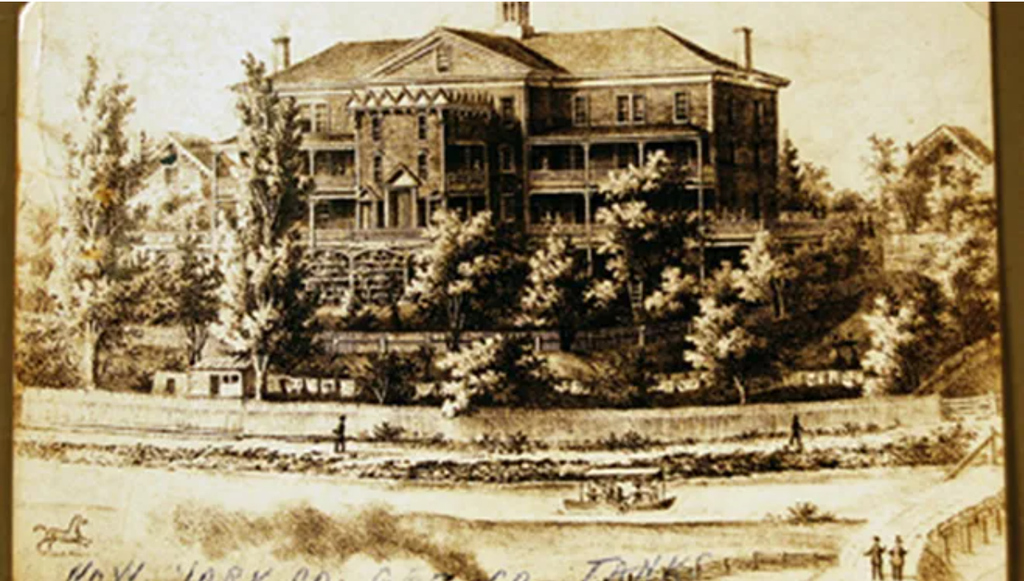
Southerners, in fact, sent their daughters north of the Mason-Dixon Line to go to school. You could say, that they came to Cottage Hill College and touched down in York to touch up. The academy stood on the north bank of the Codorus, giving the main nearby road – Cottage Hill Road – its name today.
Not far away, on the west bank of the creek, York County Academy offered education opportunities to girls – and guys. Mary Sophia Cadwell Fisher arrived in York to teach in its female division. She married a York County judge, served as a Civil War nurse and became a leading York citizen.
Here is Jim McClure’s description about Cottage Hill Academy in “Never to be Forgotten.”
John F. Hey purchases land along present-day Cottage Hill Road in York where he constructs a four-story school for girls. Cottage Hill Academy, a newspaper said, “is situated on a beautiful eminence, overlooking the romantic and placid Codorus … .” Several owners operate the school before it closes in the 1870s. The York Gas Co. later purchased the site and demolished the academy.”
Imagine this:
A girl traveling to York to get some finishing touches at Cottage Hill College would have arrived by train. In fact, tracks ran near the academy, making the last leg of the trip a short walk.
She probably brought trunks for clothes, but the school provided many necessities. Beds, bedsteads and bedding were provided at cost. The students did not have to wash their own clothes. Washing was part of the boarding cost of $55 per 5-month term.
The tuition was $25, which included ancient and modern languages. Music was optional for $20, and that included instruction on piano, harp or guitar. Vocal music was a mere $1.
Other costs included a $5 charge for textbooks, school stationery and library privileges.
Those costs seem low, but Mr. Hey’s academy was an exclusive finishing school in its day.
So exclusive that the school did not last through the end of the century.
+++
1850s: Voices against slavery
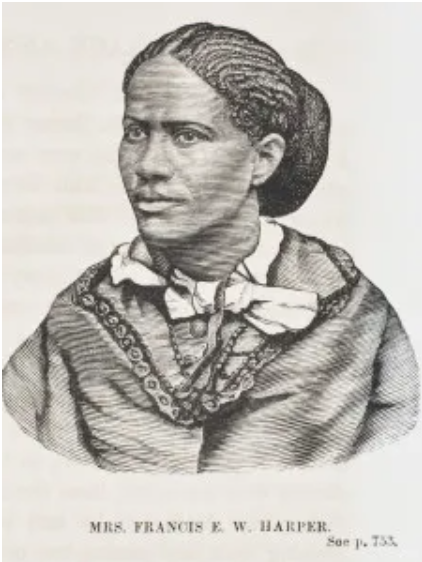
Frances Ellen Watkins Harper was a widely known Civil War-era poet, writer and lecturer, and a strong national voice for abolition and women’s suffrage.
But before she reached heights, the African-American woman was a teacher in York in the 1850s.
Jim McClure wrote in “Almost Forgotten” that while she was in York, she pondered whether to continue in education and move into the anti-slavery field.
In her long life – 1825 –1911 – she witnessed many things, including the Underground Railroad in operation in York.
“I saw a passenger per the Underground Railroad yesterday. Did he arrive safely?” she wrote.”Notwithstanding that abomination of the nineteenth century – the Fugitive Slave Law – men still determine to be free. Notwithstanding all the darkness in which they keep the slaves, it seems that somehow light is dawning upon their minds.”
“The Slave Mother” is an example of her work:
Heard you that shriek? It rose
So wildly on the air,
It seemed as if a burden’d heart
Was breaking in despair.
Saw you those hands so sadly clasped –
The bowed and feeble head –
The shuddering of that fragile form –
That look of grief and dread?
Saw you the sad, imploring eye?
Its every glance was pain,
As if a storm of agony
Were sweeping through the brain.
She is a mother, pale with fear,
Her boy clings to her side,
And in her kirtle vainly tries
His trembling form to hide.
He is not hers, although she bore
For him a mother’s pains;
He is not hers, although her blood
Is coursing through his veins!
He is not hers, for cruel hands
May rudely tear apart
The only wreath of household love
That binds her breaking heart.
His love has been a joyous light
That o’er her pathway smiled,
A foundation gushing ever news,
Amid life’s desert wild.
His lightest word has been a tone
Of music round her heart,
Their lives a streamlet in one
–– Oh, Father! Must they part?
They tear him from her circling arms,
Her last and fond embrace.
Oh! Never more may her sad eyes
Gaze on his mournful face.
No marvel, then, these bitter shrieks
Disturb the listening air:
She is a mother, and her heart
Is breaking in despair.
Imagine this:
Farmer Samuel Berry hosted many visitors, most unwanted. Berry, a freedman, farmed land near Shrewsbury before the Civil War. He housed freedom seekers from south of the Mason-Dixon Line until it was clear for them to move farther north to freedom.
Then local law enforcement officials visited his farmhouse as well as law enforcement officials from Maryland. It was illegal under federal law to harbor enslaved people. And enslavers from the South also came knocking at his door.
An eye-witness to these events, daughter Amanda Berry, wrote about these events, giving insight as to how the Underground Railroad operated: “About two years or more after this, the papers were full of notices of a very valuable slave who had run away. A heavy reward was offered. He had by God’s mercy got to us, and by moving the poor fellow from place to place he had been kept safe for about two weeks, as there was no possible chance for father or any one to get him away, so closely were we watched,” she wrote in her autobiography.
As an adult, Amanda Berry Smith – 1837-1915 – joined Frances Harper in gaining a national voice. She became a well-known missionary, covering four continents.
Read more: Frances Ellen Watkins Harper gives York, Pa., place in African American Museum in Philadelphia
+++
The question
Much changed in York County, as outlined in this Witnessing York post, before the Civil War. As we phrased it, York County was “under construction.” In what ways are we still under construction? Our community has filled in many gaps including social services and education, but what are areas that still need “worked on”?
Related links and sources: Jim McClure’s “Never to be Forgotten.” Jim McClure – York County in the 1700s: Photos, York Daily Record.
— By JAMIE NOERPEL and JIM McCLURE